For turning the steering wheel steering angle sensor is the main component. The steering angle sensor is an important device used for measuring the steering wheel angle and delivering data to the vehicle’s electronic control unit. The steering angle is important for vehicle safety and Advanced Driver Assistance Systems, which make easy configuration of steering inputs.
In this post, we will cover details of the steering angle sensor and relevant factors.
What is a Steering Angle Sensor (SAS)?
- A steering angle sensor, also called SAS, is a small part of vehicles. Its main uses are to measure position and steering wheel rotation.
- SAS controls the steering wheel turning speed and helps the car’s electronic system to follow the driver’s instructions accurately.
- This sensor makes a bridge-like connection between the steering and the car’s inner system. Delivering the correct data of the steering wheel position helps the vehicle to act according to the input.
- If the steering sensor does not work well, advanced handling features of the vehicle do not operate properly and make the vehicle unstable.
- Steering angle sensors come in two types: analog and digital. Analog steering angle comes with a potentiometer design. that comes with a resistive track and a wiper moving over it when the steering wheel turns; the resistance varies, and the output voltage varies according to that process.
- This analog voltage signal has a direct relation with the steering wheel position and makes easy steering input calculation.
- The digital steering angle sensor comes with LED techniques and effective value readings. This digital steering angle sensor comes with optical encoding for calculating steering wheel angle, a light source, and a photodiode sense coded disc movement connected with the steering shaft.
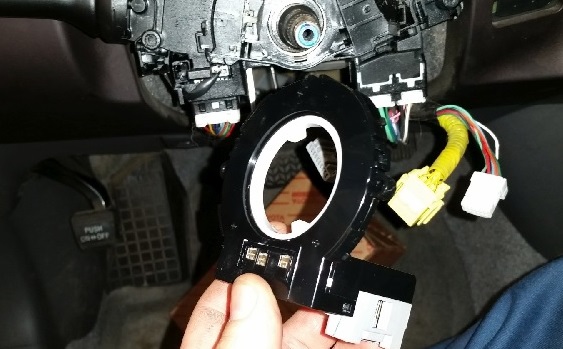
Steering Angle Sensors Working
- The steering angle sensor’s main operation is to monitor steering wheel movement trasnform into an electronic signal, which can explain. It operates with optical encoders for measuring the angular speed and the turning direction of the wheel.
- These values are helpful for stable vehicle operation. It exists in the steering column, and the sensor is accurately connected for the detection of minor tweaks of the wheel. The main point is to give real-time feedback for the car’s electronic control systems.
- The main sensor feature is its working function, like Electronic Stability Control (ESC). If the sensor checks that the steering input is not according to the car’s motion when an abrupt maneuver occurs, ESC operates to make a correction through the brakes using certain wheels.
- that control skids and maintain control in difficult driving conditions
- This sensor is also compatible with Advanced Driver Assistance Systems (ADAS) lane that helps and provides control. through setting tabs over the steering wheel position, adjustments that provide safe features.
Steering Angle Sensor Features
The steering angle sensor is an important component for different vehicles that gives the required data for different systems. Some main features of the steering angle sensor are
Electronic Stability Control
- ESC employs steering angle sensor data for the detection and instability of the vehicle during oversteering.
- proper analysis of steering angle input and vehicle dynamics: the ESC system uses brakes for wheels for stable vehicle operation
Traction Control System
- The TCS system gets steering angle sensor data for proper traction and control of wheel spin. Through accurate detection of steering angle, the TCS system can set engine power and brake for tracting maintennace.
Power Steering
- Power steering system works with the steering angle sensor details for setting the power level according to steering angle and vehicle speed.
- that gives accurate and proper steering operation
Adaptive Cruise Control
- This system uses sensor data for setting the vehicle speed and the distance from the vehicle when changing lanes
Lane Departure Warning System
- This system, with the help of sensor data, checks for unintentional lane changing. if system check vehicle drift lane without a rotating signal, gets on that give signal to the driver through an audible warning.
Autonomous Driving Systems
- Autonomous driving systems based on steering angle data for getting an idea of driver maneuvers and managing steering input
Signs of a Bad Steering Angle Sensor
- There are different signs of a faulty steering angle sensor that need to be sorted out as soon as possible. some common sign areas
ESC Warning Light On
- ESC warning light comes on due to a faulty steering angle sensor. This light is on when errors occur between the driver’s steering input and the vehicle’s real direction.
Improper Steering Response
- Faulty steering response is also a sign of a bad steering angle sensor. It is based on the vehicle veering to one side and the steering becoming heavier or lighter than normal.
Steering wheel bad centering
- The faulty sensor result indicates that the steering wheel is not straight. That means faulty steering features affect turning response, or the steering wheel is not at the center after a corner.
Stability Control losses
- • A bad steering angle sensor also causes stability control. Different features like electronic stability control and traction control do not work accurately.
Inaccurate ADAS features
- different ADAS-based steering input for accurate correction. If the steering angle is not working, lane keeping causes the tug wheel to go in the wrong direction, causing a slight drift.
Main Causes of SAS Failures
- Different factors affect sensor operation. such as faulty wiring like loose connections and corroded or burned wires, which affect communication between the sensor and the vehicle system. These faults are common for older car models and where harsh conditions occur.
- Improper alignment also causes failure, which occurs during repairs such as suspension setting, alignment of the wheel, and steering column operation.
- • A minor change causes faulty data to be delivered to the vehicle’s control systems.
- Calibration error exists after repairs, like airbag installation and steering system variations. If accurate calibration does not occur, sensor data not configured with vehicle functional requirements causes a faulty system.
Troubleshooting process of SAS
Different techniques are used for troubleshooting sensors.
Check connections.
- First of all, inspect wiring and find loose connections, damaged insulation, and corroded terminals. Replacing damaged wire can make effective communication between SAS and the control systems.
Sensor Alignment
- Different tools used for monitoring sensor readings with the position of the steering wheel. If any fault occurs, set the sensor according to the features of the manufacturer’s details and avoid any faulty movement.
Run a Diagnostic Scan
- Some advanced vehicles have features for generating codes that indicate sensor faults. through an onboard diagnostic scanner for getting codes that helps to find where faults occur in wiring hardware
Recalibration of Sensor
- When repairing completed sensors, recalibration helps to provide data for systems such as ESC and ADAS. Follow the vehicle manual for getting accurate acurate results
FAQs
When are steering angle sensors needed for replacement?
- Steering angle sensors are high strength and do not need early replacement. but if the sensor was damaged or faulty, it needed replacement. Proper vehicle maintenance and testing help to solve errors early on.
Is it safe to drive with a faulty steering angle sensor?
- No, it is not good practice, since faulty sensors affect the working of the vehicle and also its system, such as electronic stability control and traction control, which affect vehicle control and stability.
What is the cost of steering angle sensor replacement?
- replacement cost of steering sensor based on vehicle model and manufacturer, as well as sensor type and repair cost. Normally it is costly to repair since it requires special tools.
Is it possible to replace the steering angle sensor myself?
- Steering angle sensor replacement becomes difficult since it requires certain tools and skills. It is suggested to get replacement service from technicians for accurate installation and calibration.
Can a bad steering angle sensor affect fuel economy?
- It does not directly affect fuel efficiency but indirectly affects it through affecting system operation, like the engine control module and transmission control module. system based on proper steering angle data that manages fuel efficiency.
Can a bad steering angle sensor affect the vehicle to pull to one side?
- Yes, a bad sensor resulted in the vehicle pulling to one side, normally at highway speeds. since the vehicle stability control system does not have features for accurate correction of steering input faults
Can a bad steering angle sensor affect the performance of adaptive cruise control?
- It affects the working of the adaptive cruise control. The system works based on correct steering angle data for setting the car speed and the ahead distance of the vehicle during navigating curves.
Can a faulty steering angle sensor affect the lane-keeping assist system?
- Yes, it affects the working of the lane-keeping assist system. system gives faulty data steering inputs for detecting lane markings correctly.
Conclusion
The steering angle sensor is a main part of vehicles for safe operation. Through calculating the steering wheel angle, the sensor makes the vehicle stable, accurate to control, and good to drive. For safe operation, maintain steering sensor health with proper inspection and accurate repair. A fault with the sensor reduces vehicle working safety and increases maintenance costs.