Car air conditioning systems cool internal parts of the car through the circulation of refrigerant in loop form. When we turn on the car’s AC, the compressor applies pressure to the refrigerant gas, and that gas is converted into high-pressure and high- temperature. This gas goes to the condenser and releases heat, which is converted into liquid through condensation.
That liquid flow in the thermal expansion valve reduces pressure and temperature quickly. Cool liquid moves to the evaporator, gets heat from cabin air, and again gets gas conditions and releases cool air through vents.
In this post, we will cover detailed features for car air conditioning systems, how they work, their features, and related factors. Let’s get started.
What is Car Air Conditioning Systems
- Car air conditioning systems work by using refrigerant gas that absorbs heat through the internal side of the car.
- refrigerant compressed in high-pressure gas that gets cooled in the condenser on the car’s front.
- that converts it into liquid form that moves in the expansion valve and then to the evaporator in the car.
- When heated air in the car moves through the cold evaporator coil, heat is absorbed into the refrigerant.
- Cool air moves towards the car through vents. Then the refrigerant again becomes a gas, and the heated refrigerant gas moves again to the compressor to be processed again.
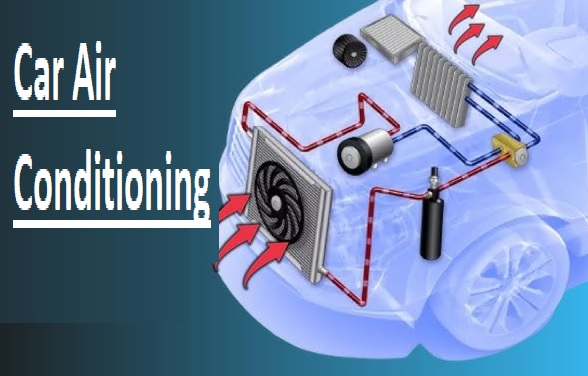
Parts of the Car’s Air Conditioning System
Read more details What is a Car Axle? Functions, Components, and Worksing
Compressor
- A compressor is a pump that works with a belt connected over the crankshaft of the engine. Refrigerant is converted into low-pressure gas in the compressor.
- Gas incompressor faces high pressures of about 250 psi-400 psi and releases condenser.
Condenser
- condenser radiator, and its working is to remove heat from the system. refrigerant shifts from the compressor to the condenser in the form of high-pressure gas.
- Pressure on gas and movement towards the condenser causes heat, and air in the tubes of the condenser condenses, changing gas to liquid conditions.
Receiver-Dryer
- When liquid releases from the condenser, it moves into a small reservoir that is called a receiver dryer. That dryer comes with desiccants and granules.
- Any moisture or liquid is removed through desiccants that avoid the creation of crystals. The receiver dryer removes gas particles in refrigerant in liquid form, which helps to send liquid refrigerant to the expansion valve.
Thermal Expansion Valve
- thermal expansion valve: a low-pressure part of a car air conditioning system. Its temperature is lower than previous components.
- High-pressure liquid refrigerant in the receiver dryer moves to the expansion valve, where it expands. In results refrigerant pressures reduce, and it moves to the evaporator.
- through pressure detection in valve flow of refrigerant that operates the system, that also causes damage to movable parts and changes
Read more details Why Are My Car Brakes Grinding?
Evaporator
- air conditioning system parts Other parts are in the engine; the evaporator exists in the cabin. An evaporator, like a radiator, comes with tubes and fins, and it absorbs heat, not causes dissipation.
- Refrigerant moves into the evaporator coil in cold, low-pressure liquid, normally at zero degrees.
- Gas releases from the evaporator and through the passenger area release heat. The fan moving over the evaporator coil sends cool air towards the passenger area.
- Refrigerant in gaseous form goes to the compressor, where pressure is applied to it, and the complete process starts again.
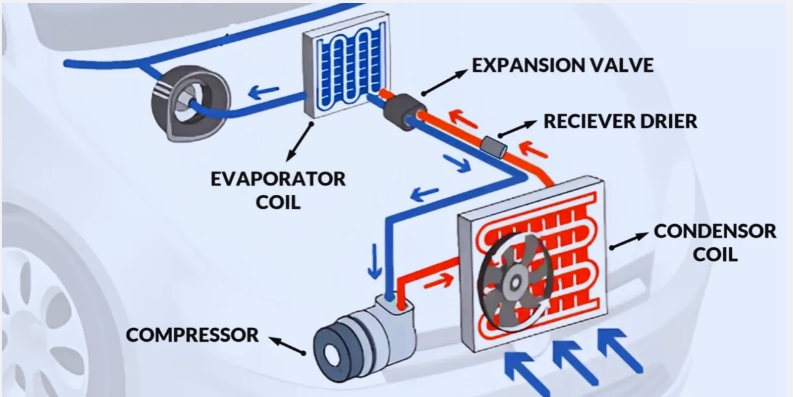
How does the air conditioning system work?
above We discussed different parts of the air conditioning system related to the air conditioning system. Now we get details for the working of the air conditioning system.
- First, the car air conditioning system gets on, which also operates the compressor.
- The refrigerant gas gets pressure through the compressor, which makes it high pressure, high temperature, and vapor and transmits it towards the AC system. As a result of compression, heat is produced.
- The heated and pressurized refrigerant moves into the condenser that is connected opposite to the radiator. The condenser sends refrigerant heat into the external environment. Refrigerant after cooling is converted into a liquid from a vapor.
- When high-pressure liquid refrigerant leaves the condenser, move to the expansion valve. that causes a loss in pressure and pressure
- Cold, low-pressure liquid refrigerant goes to the evaporator that is in the dashboard of the car. This liquid becomes cold and also reduces the evaporator temperature.
- •The blower fan sends air to the cabin that is in front of the cold evaporator coils in the AC system vents. Cool air moves to the passenger area.
Car Air Conditioning Working in EV
- This AC system works differently than the previous one. Electric motors give power to the AC compressors of electric vehicles, then the belts of the engines.
- that motor operated with the vehicle’s high-voltage battery system. The compressor comes with fewer movable components and is not based on belts for reliable operation.
What is car Refrigerant?
- refrigerant is a cooling material that converts from liquid to gas and than liquid. it absorbs and releases heat in result make cool air.
- Different refrigerants used for different devices like fridge, home ac system or vehicle work with different refrigerants.
Read more details What Is a Rivet, Features, Working, & Uses
Types of Car Refrigerant
R-12:
- R12 is a chlorofluorocarbon (CFC) Freon part of an AC system that was used until the 1990s. but it has been banned since it affects the ozone layer. Vehicles made before 1995 used R12.
R-134a (HFC-134a):
- R12 was replaced with R134a since R12 causes hazardous effects on the environment. R134a is safer than R12 AND part of different vehicles, but it has some bad effects on ozone. now it also replaced
R-1234yf
- R-1234yf, also called HFO-1234yf, replaced R134a, which is hydrofluoric-olefin refrigerant.
- R-1234yf is also an environmentally friendly material. It is used in car models made after 1921.
Car Air Conditioner Maintenance tips
- For proper working of the car air conditioning system, do regular service and add refrigerant. During service, the technician monitors different parts like the condenser, compressor, and evaporator and finds any leakage.
- Also set the accurate refrigerant level and replace air filter to maintain cooling performance for a longer working life.
- Perform car service after one to two years to avoid serious damage.
- Regular services come with checking the refrigerant level and pressure monitoring and refilling refrigerant.
- Inspection of AC parts like hoses and seals, also check
FAQs:
How Does the Car AC Get Air?
- The car AC gets air externally with the intake closed to the windshield or with recirculating air in the cabin. That air is pulled with the cabin air filter to remove impurities before it becomes cooled and moves through the vents.
Does using the car AC use fuel?
- car acsystem not usesfuel orcan very little amount. The AC compressor gets power from the engine, which needs fuel for working. Some advanced vehicles are highly efficient and come with a system that uses low fuel.
How to Troubleshoot a Car Air Conditioner?
- For troubleshooting air conditioning system faults, check relays and fuses. Also check the refrigerant level, and make sure the air intake is not affected by clogging.
How to clean a car air conditioner?
Cleaning the car air conditioning system increases efficiency and also avoids smells. Follow these tips for cleaning the car air conditioning system:
- Inspect the air filter and replace if you find any fault.
- With the help of cleaning spray, clean evaporator coils of dust particles.
- Remove dust in vents and car internal parts, and use spray for disinfection of the internal system of the cabin and remove smells.
When Do I Have My Car Air Conditioner Serviced?
- Do car maintenance in one year, for safe driving, and without any difficulty on the road. If you perform regular regularservices avoid any small fault becoming larger.
- Get service from a professional and follow the user’s manual for proper working of the system.
Is 72 degrees cold for AC?
- Normal temperature for a car AC system is based on conditions. Normally 72 to 78 degrees is comfortable, and manage humidity.
How much time to refill car AC gas?
- Car air conditioning recharging takes about one hour for removing old gas and refilling with new refrigerant.