There are different parts of a car that perform different functions. Some parts of the car are also ignored by the car driver since they are not important. The muffler is also an overlooked part, but it has importance for a vehicle’s working life. It basically reduces the sound produced by the car engine and provides noiseless driving.
In this post, we will cover the detailed features of mufflers and their importance in car performance. So let’s get started.
What Is A Muffler In a Car?
- The muffler of a car is used for controlling noise and reducing the noise generated at the car engine.
- The engine generated a pulsating noise if the car did not have a muffler. Basically, a muffler causes uniform driving by suppressing sound.
- If the muffler is not working or is faulty, it causes noise. so accurate working is needed for the muffler’s continuous operation
- A car muffler, also known as a silencer, is a metallic part connected to the exhaust system of a vehicle.
- A muffler, through the help of chambers, sound-suppressing materials, and tubes, reduces sound.
- For advanced cars, mufflers help to manage fuel efficiency.
- The car muffler structure, made with aluminum and steel, makes a connection between the engine and the exhaust system.
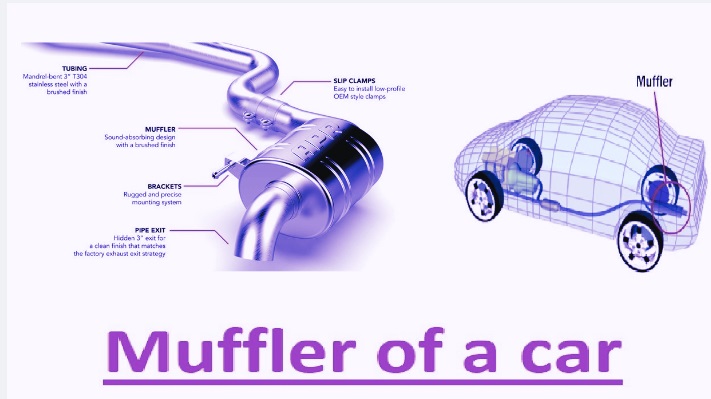
Muffler Working
- The working of the muffler started with the sound generated when the engine started the combustion process. Sound reaches the muffler through the passing exhaust system.
- The muffler structure comes with a chamber, tubes, and pores for sound wave manipulations.
- When sound goes to the muffler, some parts and sound absorption occurs and finally dampens through destructive interference.
- The muffler chamber and tubes are configured in such a way that sound waves having the same amplitude and reverse phase cancel each other and minimize noise.
- noise design such that it reduces noise without affecting exhaust gas movement.
- Noise suppression and exhaust continous flow occurs insuch way provides engine works accurately in accurate way.
Parts of a Car Muffler
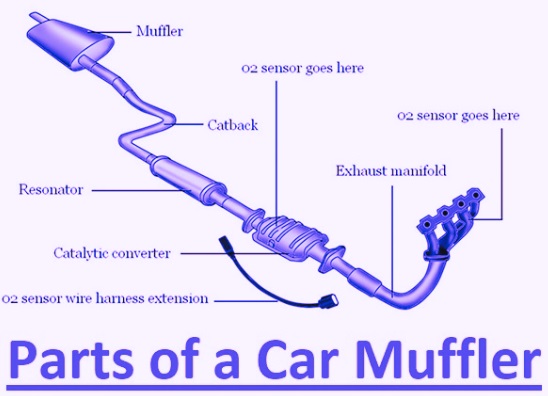
Automotive mufflers come with different parts, each performing different functions.
external shells
- External shells of car mufflers are used as a protection layer or cover. It comes with a strong and high-strength material structure like steel or aluminum.
- This shell protects the inner assembly of the muffler from external faults and increases the durability of the design.
Baffles
- There are inner partitions exists in the muffler, varying the direction of exhaust base flow. Its main function is to provide backpressure regulation and modulated gases of noise.
Mounting Brackets
- Mounting brackets make a strong connection with the exhaust system. It makes proper configuration of parts of the muffler and avoids extra movement for making their connection.
- mounting brackets, stable muffler and complete exhaust system
Sound-dampening materials
- The muffler of a car reduces noise; for this purpose, it has sound-absorbing materials like fiberglass.
Perforated Tubing
- perforated tubing design exhaust base since it filters through tubes and other components. Perforation of tubes provides gas movement that helps to reduce noise and backpressure and proper regulation.
Catalytic Converter
- mufflers configured to catalytic converters, components that minimize hazardous exhaust and polluted gases. A catalytic converter causes certain chemical reactions in the exhaust system that turn hazardous materials like carbon monoxide and nitrogen oxides into less hazardous materials.
Mufflers of different types
There are different types of mufflers; each performs certain operations.
Straight Mufflers
- A straight muffler comes with a simple design and has a pipe channel and holes in the design. It has absorbent material layers that absorb noises caused by exhaust fumes.
- in straight flow The muffler type causes gas to flow in a straight line without any hindrance, causing loud exhaust notes with the sound we observed in racing vehicles.
Zigzag design mufflers
- • The zigzag muffler comes with small chamber mufflers in a single design. It dampens noise through a zigzag design assembly, causing proper noise reduction and regulation of backpressure with proper emissions.
- This muffler design causes smooth assembly for exhaust sounds and engine operation.
Resonance Chamber Muffler
- Resonance chambers work through the following resonance to dampen certain sound frequencies. This muffler chamber-like design comes with different holes, causing gas expansion to properly control exhaust working.
- Holes in this muffler, called OEM, result in interference of sound waves and reduce noise.
Turbo Muffler
- The turbo muffler comes with perforated tubes that manage exhaust gases. Tubes provide an S-letter-like flow path that minimizes noise without affecting exhaust flow.
- These muffler types have been used since they have a moderate level of tone and provide engine working.
Chambered Muffler
- This muffler type comes with chambers in a series of different sizes for minimizing exhaust noise. When sound waves move in chambers, they collide with walls and cancel out noises causing noiseless exhaust noise.
Glasspack Muffler
- It comes with fiberglass packing for absorbing sound. Its main feature is to dampen noise.
How Car Exhaust Mufflers are Manufactured
Car mufflers are made following different steps for making the structure. manufacturing steps explained as
Welding process
- welding process employed for forming car mufflers, where different parts and components connect. Through the welding process, different parts of mufflers, like inlet and outlet pipes, connect with baffles and mounting brackets.
- different welding processes, such as the TIG or MIG welding method, are used for making connections
Bending of Tube
- There are different tubings and pipes configured into mufflers, like perforated tubes and inlet and outlet pipes. According to muffler design, some changes in tube design were made to get the required structural shapes that thatcauses exhasut flow. For this process, tube bending is applied.
- Where metallic tube bending occurs, and sheets are at different angles and designs, a curved layout for proper gas flow.
Stamping & Forming
- Stamping helps cut and make shapes of metallic parts and convert them into different shapes through applying high pressure.
- Through using these processes, different parts of mufflers, such as external shells and baffles, are also made.
- Pre-mold dies are used for cutting in the stamping process and for forming complex designs.
Punching process
- Punching causes the making of tubing perforations or baffles. That process is part of muffler designing for a certain sound behavior. such as hole punched, different designs made that cause sound dissipation
CNC drilling process
- Drilling processes are employed for removing material parts through a drill bit. It makes holes in different brackets of the car muffler.
- This process makes accurate configurations for connection points.
Installaton a New Muffler
There are different steps involved for the installation of a new muffler
- First of all, make sure safety measures make a strong position on proper ground; for this purpose, use jack stands.
- Remove the old muffler existing on the exhaust system. that perform through loosening and unscrewing the clamps and hangers that connect the muffler
- Inspect exhaust valves for finding any sign of damage and rusting. If you find any damaged components, repair that fault before connecting the new muffler.
- Now connect the new muffler through the clamps and hangers. Check that it connects accurately with the exhaust system.
- Now start the vehicle for accurate working of the muffler.
Selection factor Muffler for Car
There are different factors that must be considered before selecting a muffler to use in your car.
Lightweight Muffler
- Get a quality and lightweight muffler since its weight affects the performance of the car. It also applies a larger weight on the damper of the car. So before replacing the muffler, check its weight.
Dissipate Noises
- Use a muffler that has good features for the suppression of noise. some low features Mufflers only minimize noise, but the best is to use a muffler that provides easy noise reduction and operates well for other features.
Causes of Muffler Failure
- Muffler faces moisture that causes rust and corrosion.
- It also has loose connections that cause rattling sounds and result in exhaust leaks.
- Clogging also causes failure of the muffler’s flow and working operation.
- Cracks on mufflers cause noise so loud that it causes failure of emission tests.
- If your vehicle is using high fuel and has low efficiency, it means the muffler is faulty.
Signs of Car Muffler Problems
Noise:
- If you are facing a high exhaust sound, that means a faulty muffler.
low engine performance
- If the engine is not performing well, it means the muffler is not working properly, which causes low power.
Bad Smell
- Another sign is exhaust gases leaking through the cabin.
LOW Fuel Efficiency
- Mileage affects the efficiency of fuel.
Damage:
- If any damage, rust, and holes are found, also muffler signs
Final Thoughts
The muffler is a main component of car uniformity and easy driving. It is working as an exhaust for increasing car’s performance. It restricts noises of the engine. Cars come with one exhaust system with one muffler. Dual mufflers are used in high-performance vehicles.
FAQs
What is the difference between a muffler and an exhaust?
The basic difference is that the exhaust control gas and muffler regulate the noise of the vehicle.
What is the working of car mufflers?
- • The basic function of a car muffler is to minimize exhaust noise and control car emissions. It also performs regulation of backpressure and provides a high-car engine working with protection of the exhaust system.
What happens to a car when the car muffler is disconnected?
- If a muffler does not exist in a car, it causes high exhaust noises, high emission pollution, and affects the engine’s performance.
Does a muffler affect acceleration?
- A clogged muffler causes different faulty signs that affect driving and vehicle’s working condition. The vehicle faces difficulty for acceleration and low power, which shows the exhaust stopping factor.