Any vehicle’s working performance is based on different components. The tire is the most important component. There are different parts of a tire. A good working tire is also based on tire structure, which also makes for safe, comfortable driving and easy handling.
In this post, we will discuss the parts of tires and learn the features of each part. So let’s get started.
Introduction to Tires?
- The tire is a circular-shaped design, and it is the main part of the vehicle that interacts with the ground during movement.
- The tire is configured on rims and has compressed air. tires used for transportation purposes, such as bicycles and vehicles.
- The tire is the only part that makes contact with the ground and transfers different driving actions, such as braking, turning, and acceleration.
- Accurately working tire supported the weight of the vehicle. Tires come with different parts, each performing its own functions.
Read related guide What Is A Car Fender & difference from Bumper?
Main Parts of Tires
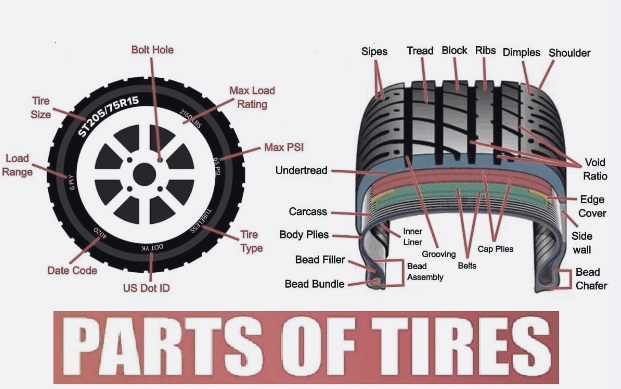
There are different parts of tires that each perform certain operations.
Here we have explained different parts; each has its own function.
Casing
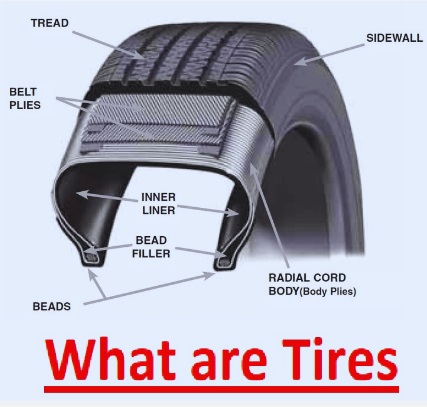
- casing, also called carcass, that exists on the inner side of the tire. Casing comes with air that helps tires work well by providing cushion.
- Its operation is like an internal tube. Casing is only the tire part, not alluding to air.
Beads
- Tire beads manage the tire with the wheel rim, which is an external component of the wheel edge. Tire beads control tire sliding during motion. It maintains tire balance since it is distributed on the tire. It manages vehicle vibration during vibration. through managing vibration control, driving time
Bead Filler
- Bead filler rubbed material in the tire bead. It makes a stable bead area and a lower sidewall. The tire bead filler has high density and stiffness that help to define the tire’s working features.
- It protects the bead from road damage. Its location close to the tire bead’s steel wires minimizes the wires’ flexibility.
Radial Cord Body
- • The cord body enhances tire strength and delivers cornering forces to the wheel. The cord body is made with rubber-coated fabric cord, also known as body plies.
- For making body plies, some other materials like rayon or nylon are used.
Inner Liner
- inner liner rubber made of a compound configured in a cord body that manages air pressures. It does not come with a reinforcement that operates the inner tube.
- In new models of cars, tires do not have inner tubes. The tire beads, bead filler, and inner liner hold air in the tire walls through operating with each other.
Bead Core
- The bead core is made with steel wire that is configured with rubber. The core makes sure the tire strongly holds the wheel rim.
Read related guide What is a Car Hood & How to open
Belt Plies
- Belt plies are layers of cord that exist below the tread part of the tire. The basic function of belt plies is to increase the stability of the tire tread.
- It enhances tire mileage and traction. Steel is a commonly employed cord material for belt plies.
Bead Apex
- bead apex is made with soft or hard rubber in compound form that covers the bead and moves into the sidewall. The bead apex operated towards the end where the dab reinforcement work was done. The bead apex makes steering of the vehicle comfortable.
Tread
- The tread part of the tire makes a connection to the road. Its compound and design needed to come with balanced wear, proper handling, high resistance, and fuel economy.
Shoulder
- It exists at the tread edge, and the shoulder provides support during impacts and cornering. It makes a grip on the road during turning.
- It provides cornering features, good protection, and good traction when turning the vehicle.
Sipe
- A small-sized sipe slit exists on the surface of the tire. Tire siping occurs when slits are cut into the tire tread for easy traction. It was made for enhancing traction during bad weather. Snow and mud tires come with hairline sipes that provide traction during bad weather.
Wear Bar
- wear bar configured with grooves of tread and applied over the complete tire. The wear bar is raised about 2/32″ (1.6 mm) through the low part of the tread voids.
- If tread blocks wear out at a level where the tread block is like the height of the wear bar, the tires need to be replaced.
Read also How Often Do I Need A Tire Rotation?
Valve Stem The
- The valve stem comes with 3 main components: core, body, and cap. New vehicle types come with a sensor at the existing end of the valve stem that gives indications about tire pressure being low.
- The valve center is a small metallic component that is threaded into the tire valve stem.
- The valve core is connected to the tire valve system for controlling air losses.
- valve core configured into the valve body to prevent air from passing through and to create strong sealing features.
- Valve cap avoids air losses since it comes with a rubber seal. that avoids dust particles going into the valve core, which would cause corrosion.
Groove
- space between 2 neighboring tread ribs known as tread grooves. that helps moisture to release easily. Voids permit tread stop extra cutting edges for traction. Grooves manage snow, mud, and slush.
- Lateral grooves give traction, helping water to release through the tire side.
Rib
- Ribs come with circumferential treads that have grooves. track blocks configured on ribs. Tires having a heavy ribbed structure come with low rolling resistance and are preferred for driving on the highway.
Read related guide How to Rev a Car, Features, Working,
FAQs.
What’s the metallic part of the tire called?
- The tire bead is the metallic part of the tire that makes the connection of the tire with the wheel rim.
What are the small components on tires called?
- They are hair-like things that are called vent spews. It is also called sprue nubs, tire nibs, and nippers. These are an important part of the tire manufacturing process.
What’s the rubber component of a tire called?
- • The tread is made with rubber; it is the external part of the tire and makes contact with roads.
What is the air thing on a tire called?
- valve stem wheel that makes the tire inflated and helps to remove and add air
read more How to Check Tire Tread Depth
What are the parts of a tire?
- Sidewall
- Tread
- Inner Liner
- Beads
- Belt
- Bead Filler
- Plies
- Belt plies
- Carcass
- Shoulder
- Textile cord ply
- Tire bead
- Sipes
- Tire casing
- Tires
- Cord body
- Hub
- rim
- Valve stem
- Belt piles
- Breaker
What is the 3% rule for tires?
- The 3 percent rule defines that during tire replacement, the new tire diameter is not different than the original value by more than 3 percent.
- since it provides accurate vehicle working, safe operations, and speedometer accuracy.
What is the 105% rule on tires?
- The 105 percent rule explains that the external rim width of the wheel needed to be 105 percent of the measured tire width. That ratio helps airflow to be connected since it moves from the tire to the rim, minimizing drag and making the vehicle aerodynamic.